


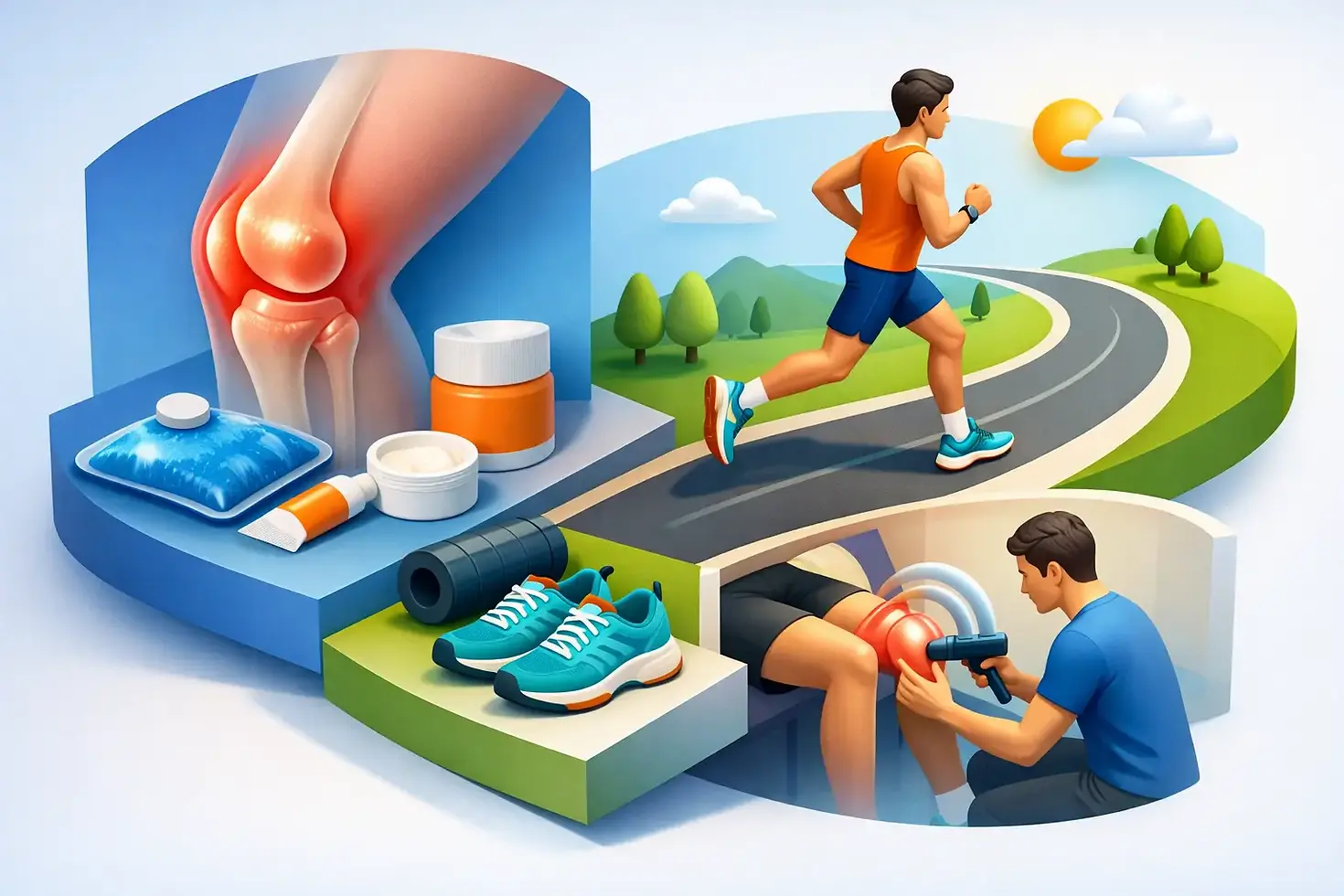
How to Treat Runner's Knee and Run Comfortably
- METATHERAPY
- 6 days ago
- 6 min read
That ache around or behind the kneecap that appears halfway through a run, on stairs, or after sitting through a long meeting can quickly change how you move. Learning how to treat runner's knee starts with a useful shift in perspective: the goal is not simply to make the pain disappear. It is to restore your knee's capacity to tolerate the running, training, work, and daily life you want to return to.
Runner's knee is commonly used to describe patellofemoral pain, a condition involving pain around the front of the knee. It is particularly common in runners, field-sport athletes, cyclists, and active adults who have recently increased their activity. While it can be frustrating, most cases improve with a structured plan that combines sensible load management, progressive strengthening, and a gradual return to impact.
First, make sure it is likely runner's knee
Patellofemoral pain usually feels like a diffuse ache at the front of the knee or behind the kneecap. It may be more noticeable when running downhill, climbing or descending stairs, squatting, lunging, jumping, or sitting with bent knees for a prolonged period. Some people notice clicking or grinding, although painless noise on its own is not usually a concern.
Not every front-of-knee complaint is runner's knee. Pain that is sharply localized below the kneecap may involve the patellar tendon. A knee that locks, gives way after a twist, swells significantly, or cannot fully straighten needs a more thorough assessment. Sudden pain after trauma, redness and heat with fever, calf swelling, or an inability to bear weight should be assessed promptly.
A physiotherapy or sports medicine assessment can help identify whether patellofemoral pain is the most likely source of symptoms and, more importantly, what is driving it in your case. The same diagnosis can have different contributors for a new runner, a basketball player in season, and an office worker returning to exercise after a break.
How to treat runner's knee without losing all fitness
Complete rest is rarely the best long-term answer. The knee needs time away from aggravating loads, but it also needs progressive exposure to build tolerance again. The practical challenge is finding a level of activity that is manageable rather than repeatedly provoking a flare-up.
Adjust running load before changing everything else
Think back to the two to six weeks before your symptoms began. Did weekly distance rise quickly? Did you introduce hills, speed work, a new running route, or more court sports? Were you training through poor sleep, stress, or fatigue? A sudden mismatch between training load and tissue capacity is a common pattern.
For a short period, reduce the elements that most reliably bring on symptoms. This may mean shortening runs, slowing the pace, avoiding steep descents, or replacing one or two runs with cycling, swimming, or an elliptical session. You do not necessarily need to stop running completely if pain stays mild, does not alter your stride, and settles back to your usual baseline by the following day.
A useful guide is to keep discomfort during activity at a low and tolerable level, then watch the 24-hour response. If pain becomes sharper, increases substantially, causes limping, or remains worse the next day, the session was likely more than the knee could tolerate at that stage. Reduce one variable at a time, such as distance or hills, so you can learn what your knee responds to.
Build strength where running demands it
Running places repeated demand on the quadriceps, hips, calves, feet, and trunk. For many people, strengthening these areas is more valuable than chasing a perfect running form or relying on passive treatment alone. The right exercises depend on your symptoms, current strength, and training goals, but the program should be challenging enough to create adaptation and controlled enough not to create a prolonged flare-up.
Early exercises may include a tolerable version of a wall sit, squat, step-up, split squat, or leg press to strengthen the quadriceps. Hip-focused work such as side-lying hip abduction, band walks, and single-leg control drills can support lower-limb control. Calf raises and foot-strengthening exercises matter as well, especially for runners who are increasing mileage or moving toward faster running.
As symptoms settle, rehabilitation should progress beyond low-load exercises. A runner needs to tolerate single-leg strength, deeper knee bend positions, deceleration, hopping, and eventually running-specific impact. If your program never progresses, it may feel safe but fail to prepare you for the demands that caused the pain in the first place.
Technique can be worth assessing, particularly when pain occurs only at certain speeds or on hills. Small changes, such as a modest increase in cadence or avoiding excessive overstriding, may reduce knee load for some runners. These are tools, not universal rules. Forcing a major form change can create new problems at the calf, Achilles tendon, hip, or foot.
Use symptom relief strategically
Cold therapy, heat, taping, a knee sleeve, or short-term pain medication may help some people manage symptoms. These options can be useful when they allow you to sleep, walk, or complete rehabilitation more comfortably, but they should not be used to push through escalating pain.
Hands-on treatment may also provide short-term relief when stiffness, muscle guarding, or restricted movement is part of the picture. In an integrative rehabilitation plan, physiotherapy, chiropractic care, registered massage therapy, and athletic therapy may each have a role depending on your assessment findings. The lasting change still comes from progressive loading, movement confidence, and a training plan that matches your current capacity.
Advanced modalities may be considered in selected cases, but they are adjuncts rather than replacements for active rehabilitation. A clear diagnosis and measurable plan should guide treatment choices.
Return to running with a progression, not a test
One pain-free day does not necessarily mean the knee is ready for a previous training schedule. Return to running works best when you treat it as a progression. Start with a route and pace that are easy to control, preferably flat terrain. A run-walk format can be an excellent bridge when continuous running is not yet well tolerated.
For example, you might begin with short blocks of easy jogging separated by walking, repeated for a total duration your knee handles well. If symptoms remain stable during the run and over the next day, gradually add running time before introducing speed, hills, longer distances, or back-to-back running days. Only change one main training variable at a time.
Keep strength training in the plan while you rebuild mileage. Two focused sessions per week can maintain the capacity that supports your running. It is also wise to protect recovery basics: adequate sleep, sufficient calories and protein, and rest days that genuinely reduce training stress. These are not secondary details when your body is trying to adapt.
Look beyond the knee when symptoms keep returning
Runner's knee is not always caused by one weak muscle, one pair of shoes, or one movement pattern. Footwear can matter if a shoe is worn out, unsuitable for your needs, or changed abruptly, but buying a new model is not a guaranteed fix. Orthotics, braces, and taping can be useful in specific circumstances, particularly if they improve comfort enough to support exercise, but they should be assessed in the context of your full movement and training picture.
Consider the wider workload, too. A runner who stands for long shifts, starts a new strength program, and adds weekend hikes may be accumulating more leg stress than their running log suggests. For women, hormonal changes, pregnancy, postpartum recovery, and pelvic floor function may also influence comfort, load tolerance, and return-to-impact planning. An individualized assessment helps connect these factors rather than treating the knee in isolation.
When professional care can help
Seek assessment if knee pain has not improved after a few weeks of sensible training modification, keeps returning as soon as you resume activity, or is limiting work, sport, or daily movement. You should also book care sooner if you are uncertain about the diagnosis or are training toward a race or sport season and need a clearer plan.
At MetaTherapy, a coordinated assessment can examine strength, mobility, running demands, training history, and recovery factors, then build a plan around your goals. For some clients, that means resolving daily stair pain. For others, it means preparing to return to a 10K, the gym, or competitive sport with greater confidence.
Your knee does not need perfection before you move again. It needs an achievable next step, repeated consistently, with enough challenge to become more capable than it was before the pain began.


Comments