


How to Find Integrative Health Care Near Me
- METATHERAPY
- Jul 8
- 6 min read
You do not usually start searching for integrative health care near me because everything feels fine. It often happens when pain keeps returning, one treatment helped but not enough, or you are tired of managing symptoms without a clear plan. For many people, the real issue is not access to care. It is finding care that connects the dots.
That matters whether you are dealing with back pain from desk work, a sports injury that will not fully settle, pelvic floor symptoms after pregnancy, lingering concussion issues, or a training plateau that feels more physical than motivational. When multiple factors are involved, a single-discipline approach can help, but it may not be the whole answer. Integrative care is designed for exactly that kind of complexity.
What integrative health care actually means
Integrative health care is not a vague wellness label. In a clinical setting, it means your assessment, diagnosis, treatment planning, and progress are considered through more than one professional lens when needed. Instead of treating one body part in isolation, the team looks at how pain, mobility, strength, recovery, lifestyle, and performance influence each other.
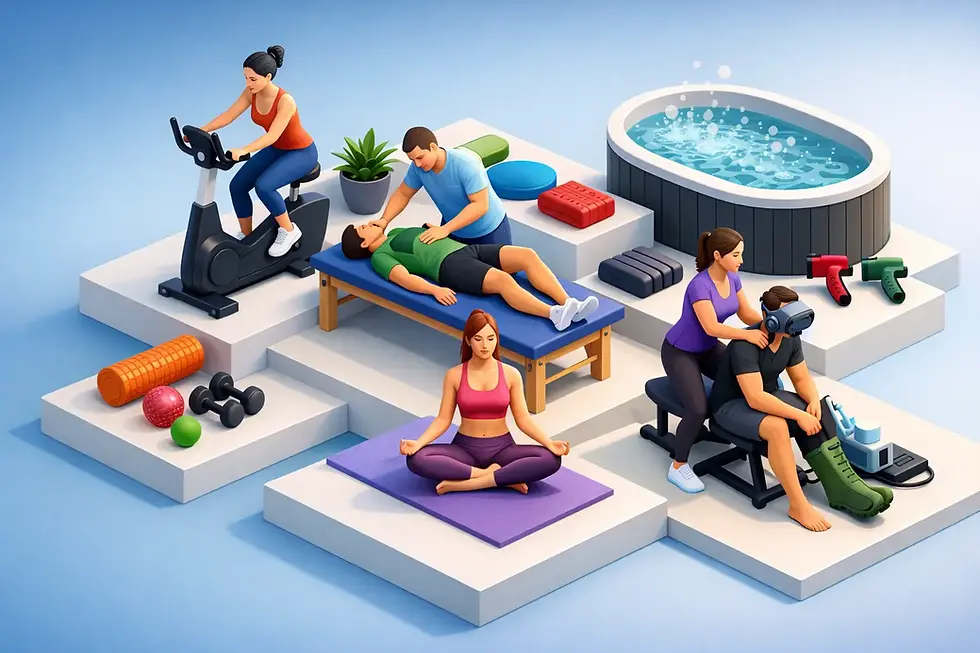
That can include physiotherapy, chiropractic care, registered massage therapy, athletic therapy, pelvic floor therapy, naturopathic medicine, personal training, and recovery-focused modalities working in coordination. The goal is not to throw every service at the problem. The goal is to match the right care to the right stage of recovery.
If your shoulder pain is being driven by training load, thoracic mobility, work posture, and poor recovery, that is a different case than a straightforward strain. If you are postpartum and dealing with pelvic floor dysfunction, low back pain, and reduced exercise tolerance, those pieces should not be managed as unrelated issues. Integrative care works best when the treatment plan reflects the full picture.
Why people search for integrative health care near me
Convenience is part of it, but it is rarely the full story. Most people want coordinated care because they have already felt the downside of fragmented care. They have repeated their story to multiple providers, received advice that did not fully align, or improved in one area while another issue kept holding them back.
A strong integrative clinic reduces that friction. Your care becomes easier to follow because the providers are working from shared goals. That can mean faster decision-making, fewer mixed messages, and a treatment plan that changes as your body changes.
It also helps with adherence. If your rehab exercises, manual therapy, performance work, and recovery strategy support each other, you are more likely to stay consistent. That is a practical benefit, not just a philosophical one.
Signs a clinic is truly integrative and not just multidisciplinary
A clinic can offer many services without actually delivering integrated care. That distinction matters.
A multidisciplinary clinic may have several practitioners under one roof, but each provider still works largely independently. Sometimes that is enough. If your issue is simple and responds well, you may not need much coordination.
A truly integrative model is different. It starts with a detailed assessment and a clear treatment plan. Practitioners communicate. Referrals happen internally when clinically appropriate, not just as an upsell. Your progress is measured against functional goals such as pain reduction, return to sport, improved strength, better pelvic floor control, or restored work capacity.
You should be able to see the logic behind the plan. Why this treatment first? Why this provider now? What changes if progress stalls? Good integrative care is structured, not scattered.
What services may matter depending on your goal
If you are searching for integrative health care near me, the right clinic depends on what you need the care to do.
For pain and rehabilitation, physiotherapy, chiropractic care, massage therapy, and athletic therapy often work well together when guided by assessment findings. Manual therapy can reduce symptoms, but long-term improvement usually depends on restoring movement quality, strength, and tolerance to load.
For active adults and athletes, sports medicine support matters when the goal is not just being pain-free but returning to performance. That may involve exercise progression, movement analysis, VO2 testing, personal training, group conditioning, or targeted recovery services. Performance-focused care should still be clinically grounded. Pushing too early can delay recovery just as much as under-loading.
For women’s health and postpartum recovery, pelvic floor therapy can be central, especially when symptoms involve pressure, leaking, pain, or difficulty returning to exercise. In some cases, care also needs to account for breathing mechanics, abdominal function, hip strength, and low back or pelvic pain.
For persistent or complex cases, advanced modalities may have a role. Shockwave therapy, STIMPOD, EMTT, deep oscillation therapy, and lymphatic drainage can be useful in the right context. They are not magic fixes, and they are not necessary for every patient. What matters is whether they are being used to support a larger treatment plan rather than replace one.
How to evaluate a clinic before you book
Start with the clinic’s model of care, not just its service menu. A long list of treatments looks impressive, but it tells you very little on its own. What you want to know is how the clinic decides which service fits which patient.
Look for language around individualized assessment, diagnosis, collaborative treatment planning, and measurable outcomes. That suggests the clinic is thinking beyond symptom relief. You should also be able to identify the types of patients they regularly support, whether that is office workers with recurring neck and back pain, runners with overuse injuries, postpartum patients, or athletes rebuilding capacity after time off.
The next question is whether the clinic can support the full arc of care. Some clinics are strong at early symptom management but weaker when it comes to return-to-activity planning. Others are excellent for training and performance but less equipped for hands-on rehabilitation. The best fit depends on where you are starting and where you need to go.
Location and scheduling still matter. If the plan requires regular visits and your clinic is hard to reach, adherence can drop fast. Near me is not just about distance. It is about making recovery realistic within your actual week.
Questions worth asking at your first visit
A good first appointment should leave you with more clarity than you had before. You should understand what is being assessed, what the likely drivers are, and what the next phase of care looks like.
Ask what the primary diagnosis or working diagnosis is. Ask what factors may be contributing beyond the painful area itself. Ask how progress will be measured and what happens if the first approach does not move things forward. If your case may benefit from another provider, ask how that coordination works.
You do not need a clinic that promises a perfect answer on day one. You need one that can explain its reasoning, adapt the plan, and keep your goals in focus.
When integrative care is especially useful
Not every ache requires a team-based model. Sometimes one provider and a clear rehab plan are enough. But integrative care tends to be especially valuable in a few situations.
It helps when your symptoms are persistent, recurring, or tied to more than one system. It helps when pain and performance overlap, as they often do in active adults. It helps when life stage matters, such as postpartum recovery or returning to exercise after a long layoff. It also helps when you want to move from treatment into prevention, which is where many people lose momentum.
This is where a coordinated clinic can make the process more efficient. At MetaTherapy, that model is built around individualized assessment and collaborative care across rehabilitation, sports medicine, wellness, and performance services, so patients are not left piecing together their own recovery path.
The right clinic should make your next step obvious
The best search result is not the clinic with the longest service list. It is the one that can explain how your pain, movement, recovery, and goals fit into a plan that makes sense. Integrative care works when it is practical, coordinated, and tailored to the person in front of the provider.
If you are looking for a place that can help you recover, move better, and stay active with fewer gaps between services, pay attention to how the clinic thinks, not just what it offers. The right care should help you understand your body more clearly and feel confident about what comes next.


Comments